Wallpaper, Wainscoting & Painted Trim: Layered Walls with Historic Charm
The Language of Wallpaper & Trim
Wallpaper and painted trim have long been central to the way homes express character, comfort, and intention. More than surface decoration, these layered elements shape how a room feels, guiding the eye, defining proportion, and creating a sense of warmth that plain walls rarely achieve. Throughout history, wallpaper and trim worked together to add depth and refinement, turning ordinary rooms into spaces with personality and presence.
In both cottage and historic interiors, these details serve as a quiet form of storytelling. Soft florals and painted paneling evoke ease and familiarity, while structured trim and patterned walls lend a sense of permanence and craftsmanship. When thoughtfully combined, wallpaper and trim create rooms that feel finished yet personal — spaces that reflect not only style, but the rhythms of daily life within them.
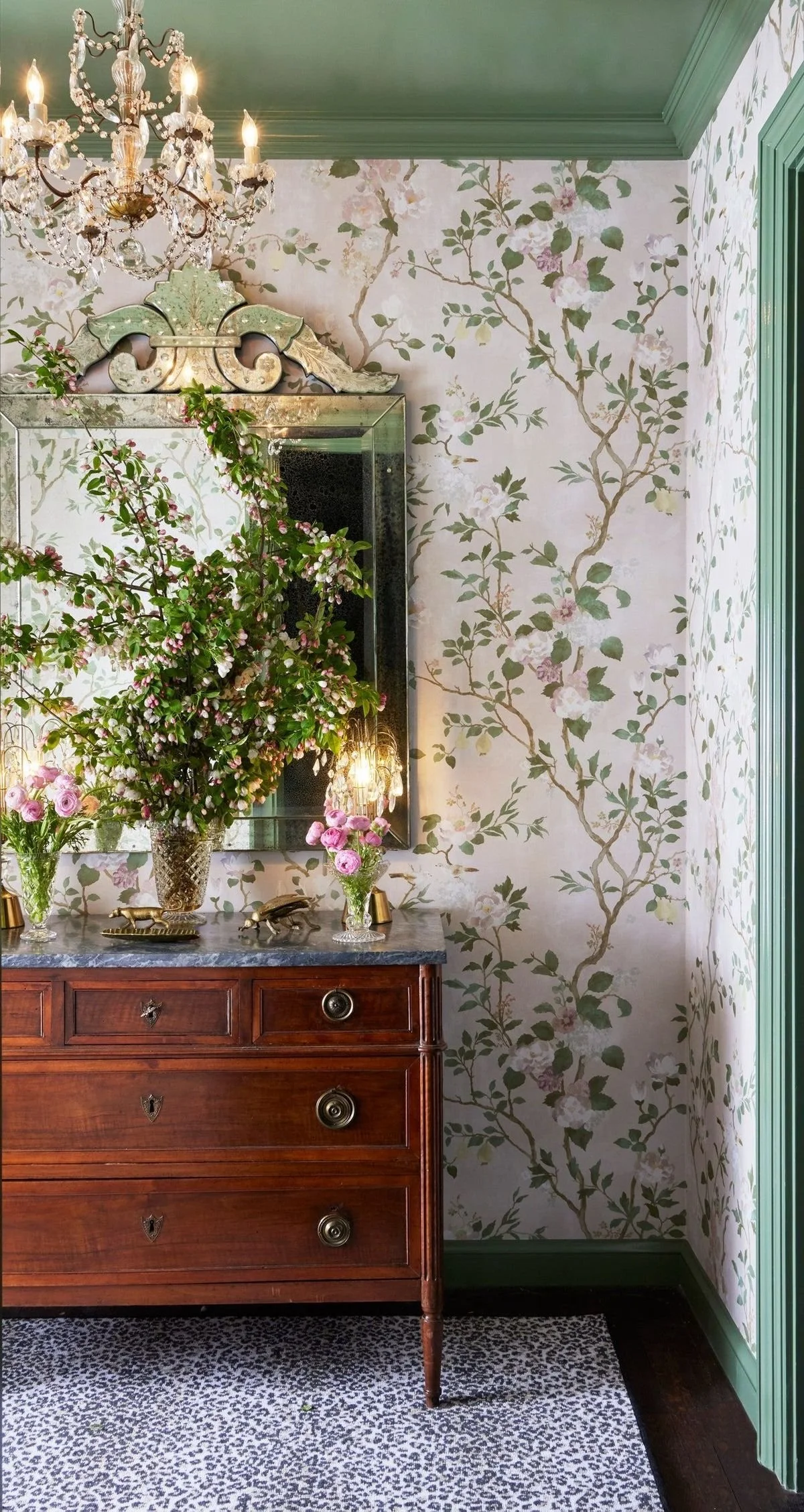
When wallpaper and trim are treated as equal partners, walls become architectural features rather than background surfaces. Painted moldings, wainscoting, and paneling give structure and proportion, while wallpaper introduces pattern, softness, and narrative. Together, they create rooms that feel layered, intentional, and deeply rooted in tradition.
Whether expressed through playful cottage florals or more formal historic detailing, these elements allow a home to feel personal while still honoring craftsmanship and permanence.
Cottage Whimsy: Wallpaper & Painted Paneling
In cottage interiors, wallpaper and trim soften a room rather than formalize it. Gentle florals, light-colored paneling, and painted wainscoting add warmth and charm while keeping spaces relaxed and welcoming. These combinations feel especially at home in bedrooms, guest rooms, and smaller living spaces where comfort is as important as beauty.
Cottage Whimsy in Its Simplest Form
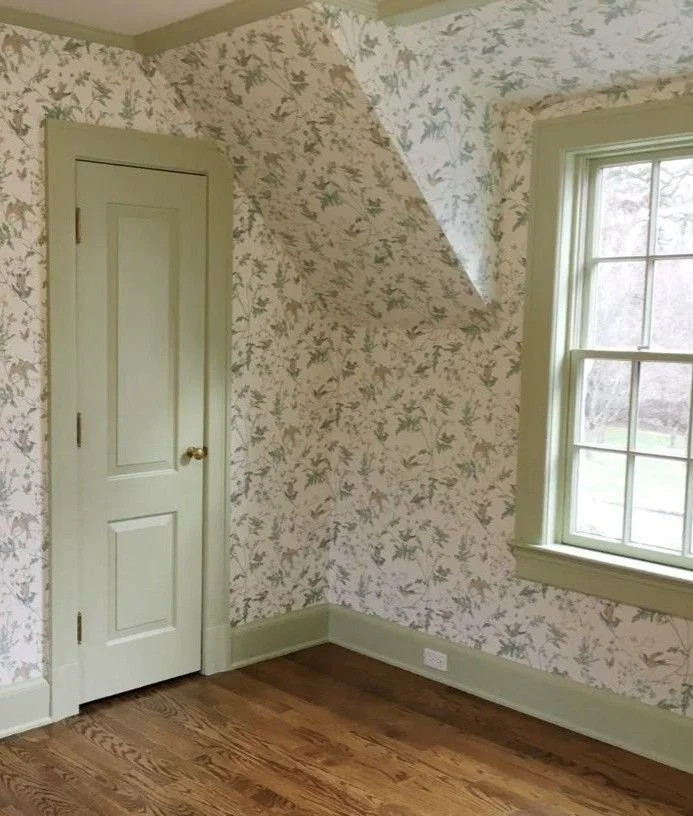
This room design exudes the quiet warmth and fresh brightness that cottage wallpaper can bring when paired with quiet, painted trim rather than elaborate detailing. The small-scale floral pattern brings softness and movement to the walls, while the muted green trim anchors the space and gives it a sense of structure. With no furnishings competing for attention, the relationship between wallpaper and woodwork becomes clear — a balance of charm and restraint that feels authentic, comfortable, and timeless.
In cottages and older homes, this approach allows pattern to add personality without overwhelming the room. Painted trim frames doors, windows, and corners gently, letting wallpaper become part of the architecture rather than a decorative afterthought.
Where Pattern Meets Daily Ritual
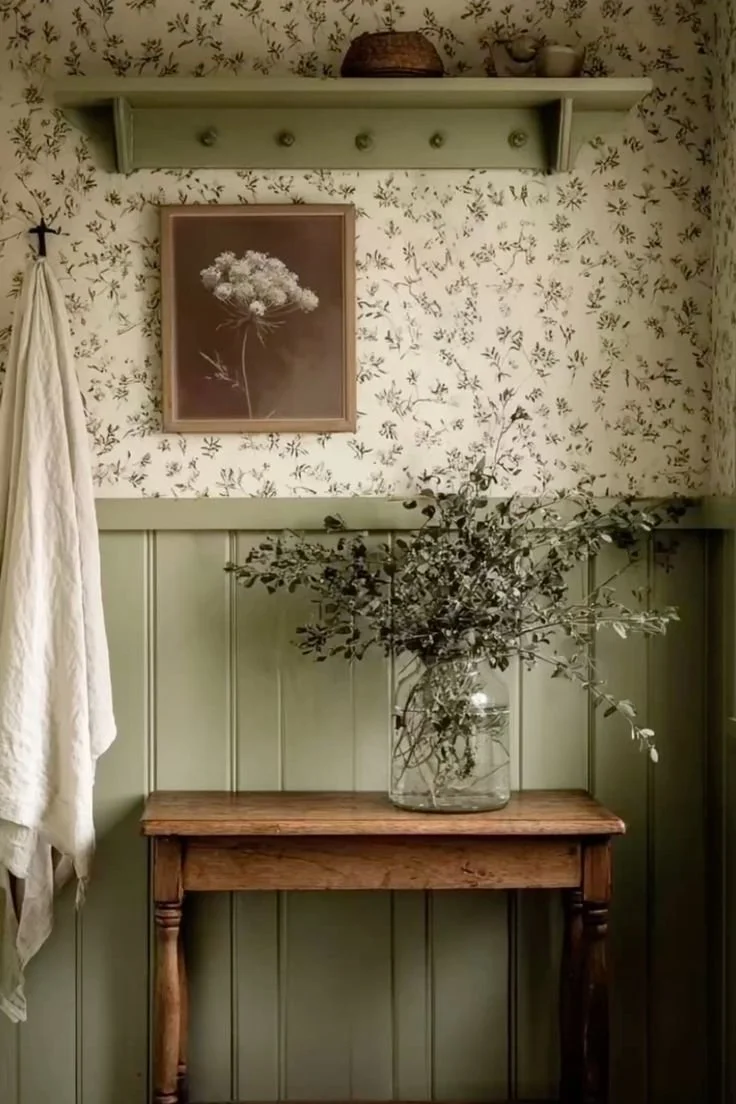
Cottage wallpaper is most successful when it becomes part of everyday life rather than a statement reserved for formal rooms. In spaces like this, painted paneling provides durability and quiet rhythm, while small floral patterns soften the walls and invite a sense of calm. The result is a room that feels both useful and cared for — a place where coats are hung, flowers are gathered, and simple moments are allowed to linger.
This layered approach reflects the heart of cottage design: practical rooms made beautiful through restraint, repetition, and natural materials. Wallpaper and trim work together to create spaces that feel settled and personal, rather than styled or overly designed.
As spaces move from shared rooms into more private areas of the home, wallpaper and trim often take on a quieter role — still expressive, but more restrained. In cottage interiors, this balance allows rooms to feel personal without becoming busy, and layered without feeling formal. The combination of painted woodwork and small-scale pattern creates a sense of comfort that feels lived-in, familiar, and enduring.
Mural Wallpaper as Architectural Storytelling
Mural wallpaper has long been used to turn walls into narrative surfaces rather than decorative backdrops. In historic interiors, these panoramic scenes were designed to be read as part of the architecture itself — framed by painted trim, anchored by wainscoting, and carefully placed to guide the eye through a room. Rather than overwhelming a space, mural wallpaper creates depth, movement, and a sense of continuity that feels both immersive and composed.
When paired with classical trim and proportioned woodwork, mural wallpaper becomes a quiet form of storytelling, allowing rooms to feel expansive, layered, and deeply rooted in tradition.
A Study in Scale, Calm, and Continuity
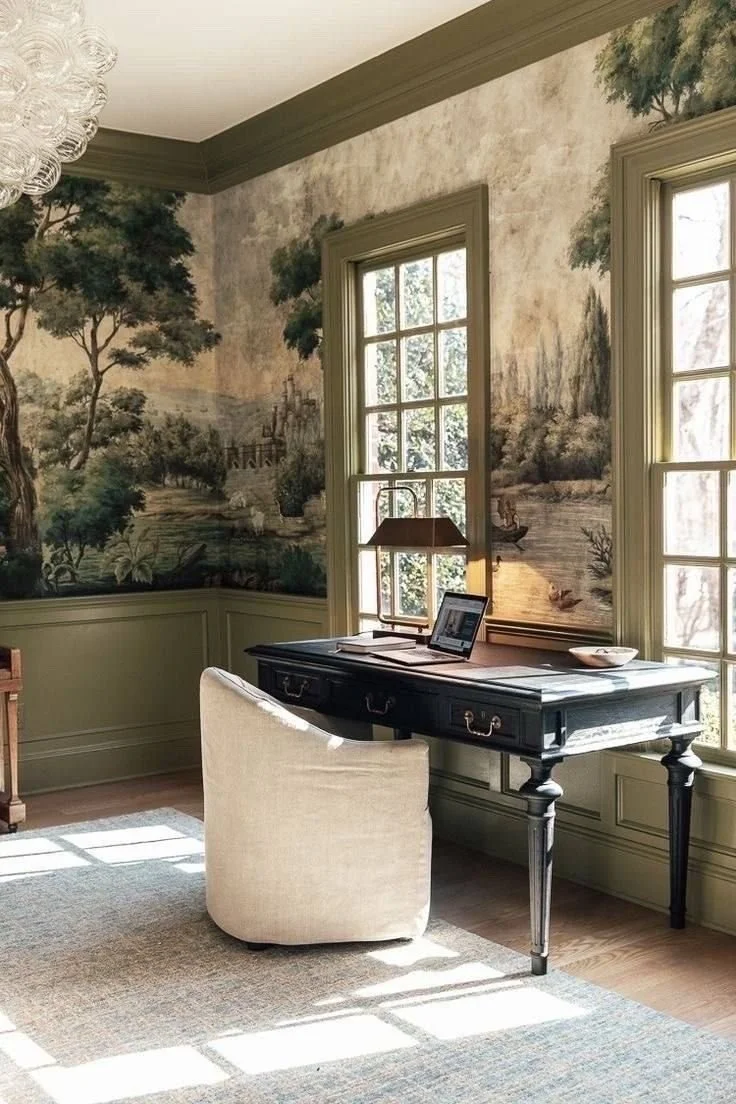
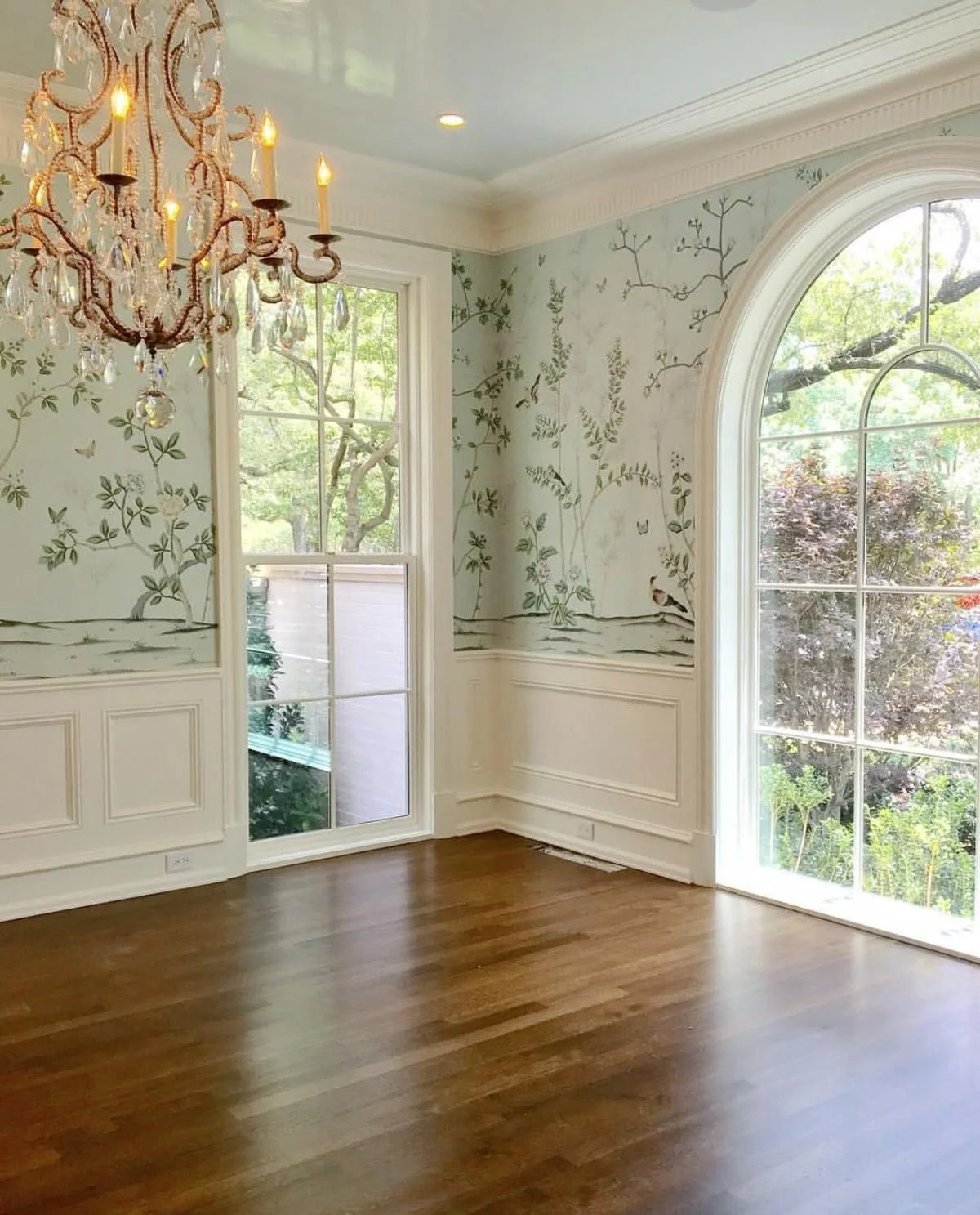
Sometimes a home can feel stripped of its former architectural promise. Mural wallpaper can add history, legacy and sophistication to any space. In this room, mural wallpaper adds a sense of depth that feels architectural rather than ornamental. The landscape unfolds quietly across the walls, expanding the room visually while remaining restrained in tone. Painted trim and wainscoting contain the scene, giving it rhythm and proportion, while the muted palette allows light to move freely through the space without distraction.
Used this way, mural wallpaper becomes a backdrop for daily life rather than a focal point demanding attention. The room feels composed, thoughtful, and grounded — a place where pattern enhances stillness rather than competes with it.
Formality with Intention
In more formal rooms, mural wallpaper is often used to establish mood and ceremony rather than softness. Here, the panoramic scene creates a sense of order and continuity, while classical trim and symmetry give the room its structure. The result is not excess, but balance — a space that feels considered, permanent, and rooted in tradition.
Used thoughtfully, mural wallpaper allows historic rooms or rooms meant to feel historic and expressive without being theatrical. Paired with proportioned woodwork and restrained furnishings, it becomes a defining element that honors craftsmanship, scale, and the quiet confidence of enduring design.
