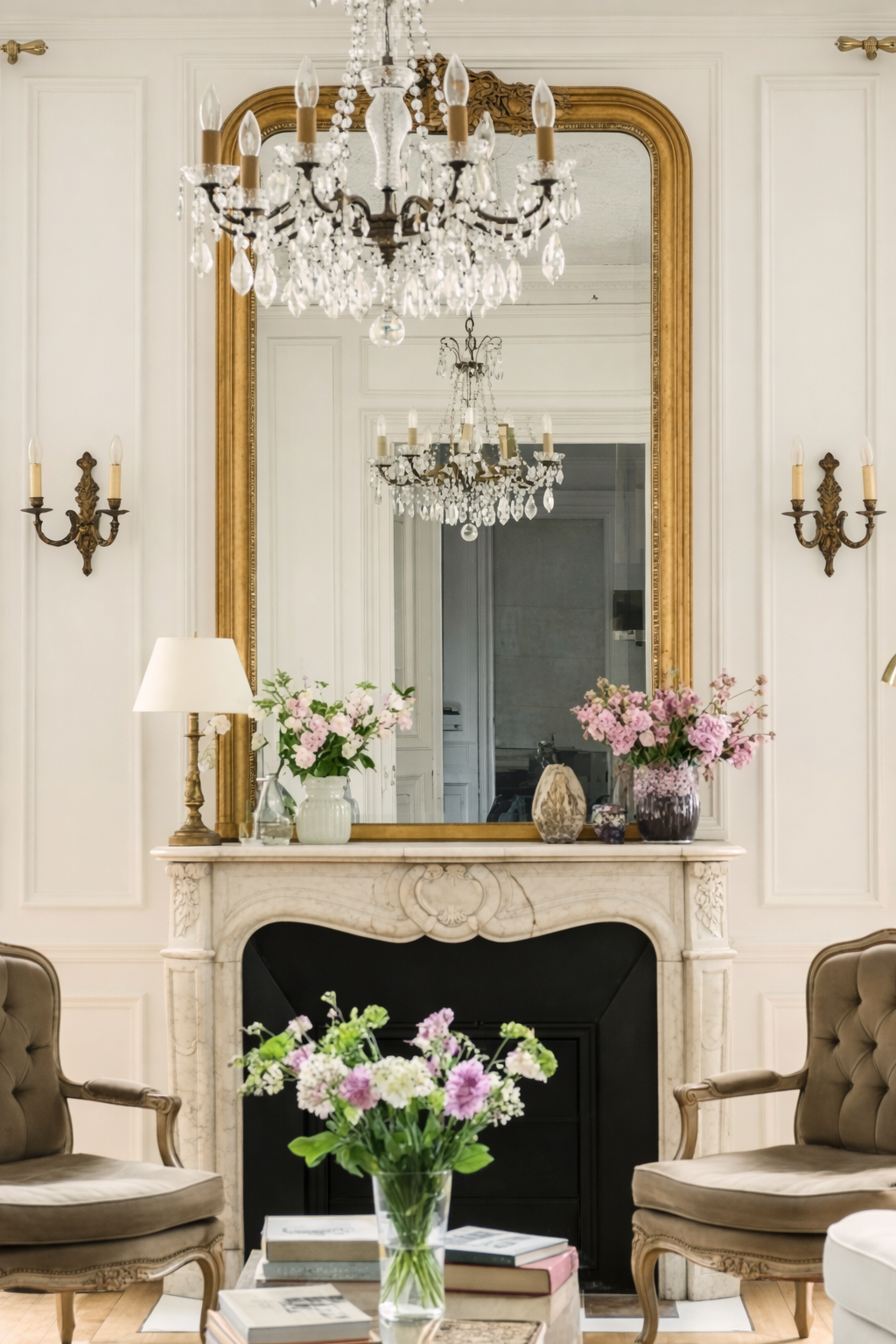
Timeless Parisian Apartment Design

Parisian apartments have long embodied a quiet elegance shaped by history, proportion, and restraint. Paris doesn’t rely on trends, it has created them throughout the centuries through architectural integrity, carefully chosen furnishings and a refined balance between ornament and simplicity.

My first trip to Paris was an introduction to the elegance of historic detail. From the boulevards at twilight, lamplit apartments revealed glimpses of ornate moldings, gilded mirrors, and comfortable armchairs within. Even the smallest touches, a glint of crystal, a collection of weathered books resting at a window, were enough to suggest the city’s sumptuous history without ever overwhelming the senses.

The Language of Timeless Parisian Design

“Timeless Parisian Design” has much to do with the influence of French Official, Baron Haussmann, who transformed the heart of the city at Napoleon the 3rd’s request in 1853. Under Hausmann’s direction, Paris emerged from an overcrowded, medieval backwater to the fabled city of light. The tree-lined boulevards, stone exteriors and wrought iron balconies that would eventually be known as “La Belle Epoque” (the beautiful period). This signature feel of open air and light is reflected in Parisian interiors with deeply set floor to ceiling windows, original herring bone floors, and gilded mirrors. Today, this classic design tradition continues with furnishings and decorative details that remain understated. Pieces are chosen for longevity rather than novelty: a well-worn armchair, a marble-topped table. The result is a layered elegance that feels lived-in and intentional, where beauty emerges quietly and endures without effort.
Key Elements of Timeless Parisian Apartments

Timeless Parisian interiors rely on proportion rather than excess. Architectural details such as ornate moldings, and original fireplaces form the foundation, while furnishings remain restrained and intentional. Materials like aged wood, stone, linen, brass, and crystal appear repeatedly — not as statements, but as quiet companions to the space.

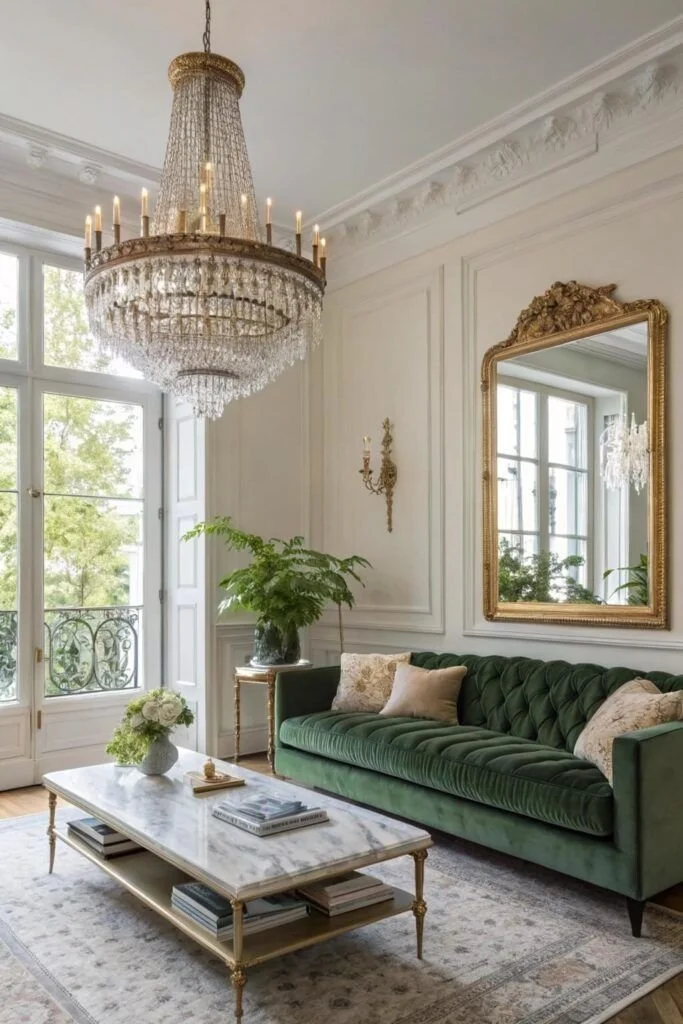
Parisian apartment living room featuring a green velvet sofa, gilded mirror, crystal chandelier, and classical architectural moldings.

Why This Room Works

The beauty of this room is in the balance of decoration with restraint. Architectural details—ornate moldings, tall windows, and classical proportions—create a refined framework, while the furnishings remain deliberately composed. The deep green velvet sofa anchors the space without overpowering it, offering richness rather than excess. Gilded accents appear sparingly, echoed in the mirror frame and chandelier, allowing light to reflect softly throughout the room. Every element feels considered, not curated for effect, which is the quiet hallmark of timeless Parisian interiors.

Key Elements

Architectural moldings and proportioned walls form the foundation of Parisian interiors, creating a sense of permanence before any furnishings are introduced. These classical details allow rooms to feel complete even when sparsely decorated.

A restrained color palette, often built on soft whites, warm neutrals, and muted historic hues, allows light to move naturally through the space. When deeper colors appear—such as forest green, oxblood, or navy—they are used deliberately, grounding the room without overwhelming it.

Furnishings favor silhouette over statement. Curved arms, tapered legs, and timeworn upholstery take precedence over novelty, ensuring each piece feels considered rather than decorative.

Gilded accents and crystal lighting appear sparingly, reflecting light rather than commanding attention. Their role is atmospheric, not ornamental.

Finally, layers of lived-in texture—books, textiles, subtle patina—introduce warmth and humanity, ensuring the space feels inhabited rather than staged.

Bringing Parisian Design Into the Modern Home

Incorporating Parisian design into a modern home is less about replication and more about interpretation. The goal is not to recreate a historic apartment, but to borrow its principles—proportion, discretion and material quality—and allow them to coexist with contemporary living.

Start with the architectural envelope. Even in newer spaces, subtle enhancements such as picture-frame molding, decorative trim, or thoughtfully chosen wall finishes can introduce a sense of structure and permanence. These details provide the quiet backdrop that allows furnishings to feel intentional rather than decorative.

When selecting furniture, prioritize form and longevity over trend. A single well-shaped sofa, a marble or stone-topped table, or a classic armchair with graceful lines will carry far more impact than multiple statement pieces competing for attention.

Lighting plays a crucial role in translating Parisian elegance into modern interiors. Rather than relying on a single overhead source, layered lighting—table lamps, wall sconces, and reflective surfaces—creates depth and warmth throughout the day.

Above all, allow the space to breathe. Parisian interiors embrace negative space as part of the design, ensuring that each element has room to be seen, appreciated, and lived with over time.

The Power of a Statement Chandelier

Classic crystal or glass chandeliers with warm metal detailing create vertical elegance and reflect light beautifully throughout the room.

Grand French Empire Chandelier
Best for high ceilings, formal living rooms, and classic Parisian salons. Shop similar Grand French Empire chandeliers here
This style anchors the room and creates the dramatic vertical emphasis typical of 19th-century Parisian interiors.

Petite French Empire Chandelier
Ideal for apartments, bathrooms, dressing rooms, or lower ceilings. Shop similar petite French Empire chandeliers here
A scaled-down version of the same historic language, offering elegance without overwhelming the space.

1920s Parisian Crystal Pendant
Perfect for smaller apartments or rooms that need refinement without grandeur. Shop similar Parisian Crystal Pendant here
This option captures Parisian glamour through proportion rather than scale.

Gilded Mirror

An antique-inspired mirror adds depth, balances architectural symmetry, and quietly amplifies natural light.

Velvet Sofa in Deep Neutral

Rich textiles such as velvet introduce softness and depth while maintaining a composed, tailored silhouette. A velvet sofa brings warmth and richness to a Parisian living room, softening formal architecture while adding depth and color. Classic silhouettes in deep, saturated hues create an inviting anchor for the space, balancing elegance with comfort and giving the room its timeless, layered character.

Marble or Stone Coffee Table

Natural stone surfaces ground the space and provide contrast against upholstered furnishings.

Layered Lighting Accents

Table lamps and wall sconces add intimacy and allow the room to transition seamlessly from day to evening.

These foundational pieces allow Parisian design to feel collected and lived-in rather than staged.

Parisian Design as a Way of Living

Timeless Parisian interiors are less about decoration and more about a way of living within a space. They evolve slowly, shaped by architecture, daily ritual, and an appreciation for objects that age with grace. Nothing feels rushed or over-considered; rooms are allowed to unfold naturally over time.

This approach values quality over quantity, restraint over display, and atmosphere over perfection. It invites spaces to feel lived-in rather than styled, personal rather than performative. In embracing these principles, Parisian design offers not a formula to follow, but a mindset — one that honors history, light, and the quiet beauty of everyday life.

Previous
Previous

Elegant Home Libraries: Rooms for Thought and Beauty