A Classic Writing Study
This post contains affiliate links. As an Amazon Associate, I earn from qualifying purchases at no additional cost to you.
From an early age, I imagined a personal corner lined with books and anchored by a weathered desk where stories could take shape. Films about writers and their intimate, lamplit rooms only deepened that vision — spaces layered with notebooks, art, and quiet intention.
A classic writing study is less about productivity and more about atmosphere. Often tucked beside a window or woven into a home library, these rooms invite reflection, reading, and unhurried thought. Soft natural light, timeworn desks, and shelves within reach create a setting where ideas unfold slowly and beautifully.
Shop the Look: Classic Writing Study Essentials
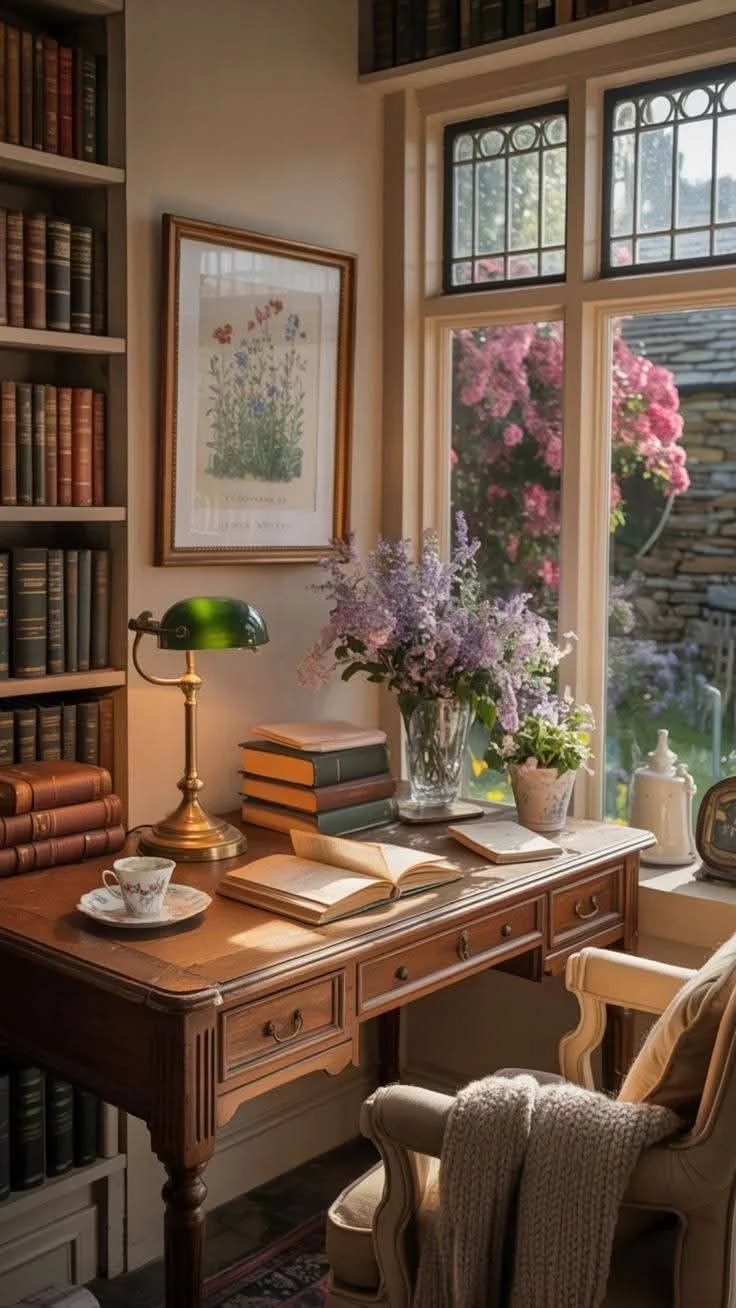
A writing study is defined by intention rather than scale. Unlike modern offices built for efficiency, these spaces are shaped by ritual — morning light across a desk, the familiarity of a well-used chair, books within reach.
At the center stands the desk itself. More than a functional surface, it establishes the rhythm of the room — shaping both its structure and atmosphere.
To recreate this feeling, begin with a thoughtfully chosen desk.
Writing Desk Options
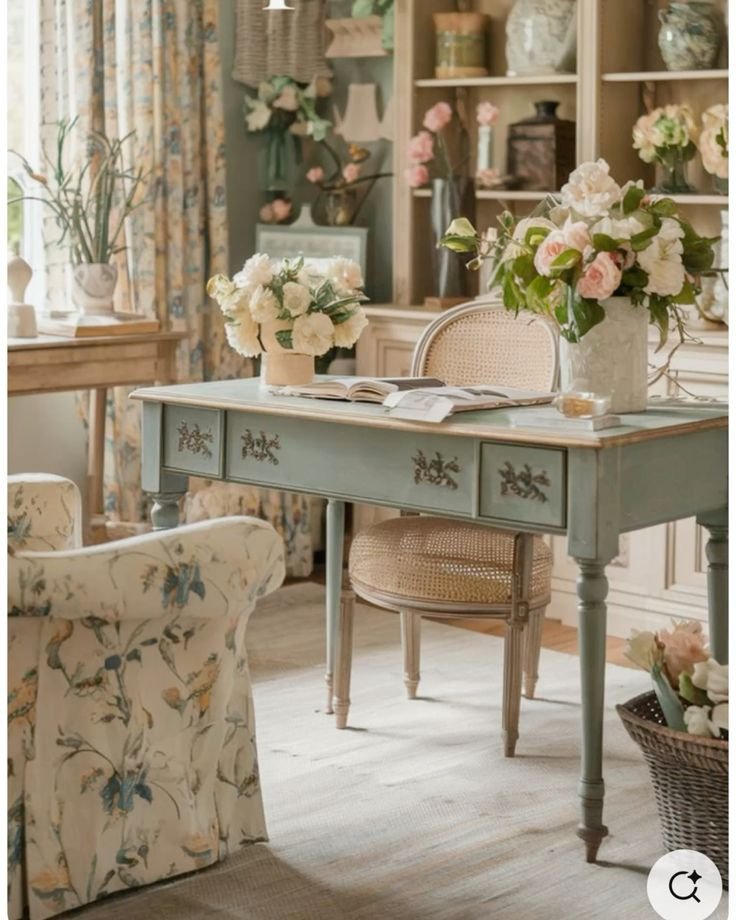
Painted Writing Desk
Soft and decorative, a painted desk introduces elegance without heaviness
Shop painted French writing desks:
• French country writing desk in antique white
•French Dauphin desk in gray with gold accents
• Scallop Desk in light sage
Styling tip: Pair with a simple linen or cane-back chair to balance the detailing and maintain a sense of lightness.
Traditional Wood Writing Desk
Substantial and grounded, a traditional wood writing desk lends quiet authority to a writing study. Rich wood tones introduce depth and permanence, anchoring the room while pairing beautifully with bookshelves, layered textiles, and warm, ambient lighting.
Shop traditional wood writing desks:
• Archivist Desk with four drawers
• Ornate Versailles desk in cherry
• Hand carved executive desk
Styling tip: Layer the desk with a few intentional pieces—such as a banker’s lamp, a small stack of books, and a writing tray—allowing the richness of the wood to remain the dominant feature.
Gilded Mirror Accents
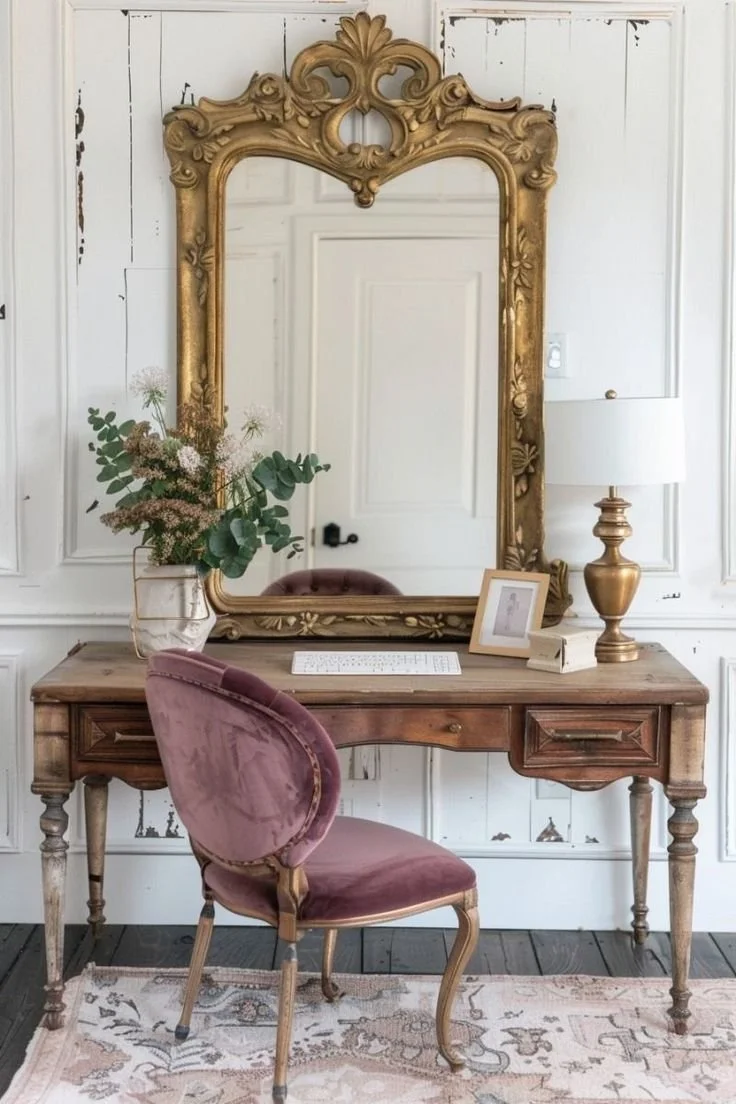
A carved, gold-finished mirror adds vertical drama and historic ornament to a study. With intricate detailing and architectural presence, this style anchors the wall above a desk and reflects light across layered interiors.
Shop ornate gilded mirrors:
• Traditional wall mounted French gold mirror
• Ornate gilded arch mirror
• Vintage inspired Baroque mirror
Styling tip: Position above a writing desk or between bookcases to reflect light and create vertical balance, allowing the gilded frame to introduce warmth without overwhelming the space.

Shop This Look
Writing Chairs
A writing chair should feel considered rather than utilitarian — supportive enough for long hours, yet refined enough to belong within a historic interior.
Shop writing chairs:
• French bergere inspired chair
• Upholstered French accent chair
• French country linen chair
• Light oak French cane chair with velvet cushion
• Pink velvet tufted writing chair with nailhead trim and wheels
Styling tip: Choose neutral upholstery to balance ornate desks.
Lighting the Writing Study
Lighting in a writing study is less about brightness and more about mood. A well-chosen desk or library lamp introduces warmth and intimacy, creating a gentle pool of light that supports reading and writing without overwhelming the space. Traditional forms—often in brass, bronze, or shaded glass—feel at home beside books and wood surfaces, reinforcing the sense that this is a room meant for evening thought, quiet focus, and lingering moments rather than constant activity.
Shop writing study lighting
• Antique Bankers Green Lamp
• Antique brass table lamp
• Small traditional swivel arm desk lamp
• Tiffany desk top lamp
• Baroque pink stained glass floor lamp
• Antique brass swivel arm floor lamp
Styling tip: Use warm bulbs to maintain atmosphere.
Traditional & Vintage-Inspired Rugs
A richly patterned rug anchors a writing study with warmth and historical continuity. Whether Persian-inspired or softly faded, traditional rugs introduce depth beneath wood furniture, soften acoustics, and reinforce the layered character of a room devoted to reading and reflection.
Shop Persian inspired rugs :
• Ivory and sage vintage distressed rug
• Warm green and gold Persian inspired rug
• Muted pink and cream medallion rug
👉 Shop The Classic Study Look
• Distressed Vintage inspired desk
• French country armless chair
• Antique white wooden bookcase
• Vintage inspired floral wallpaper
• Faded pink and cream Persian inspired rug
• Gilded statement mirror
• Baroque oval portrait
• Vintage Tiffany floor lamp
• Brass banker’s reading lamp
A classic writing study is ultimately an extension of the home library — a room shaped by books, light, and intention rather than efficiency. Whether softly decorated or richly layered, it offers a space where reflection unfolds naturally. Designed with care, it becomes not merely a room, but a quiet companion to a life well read.
